


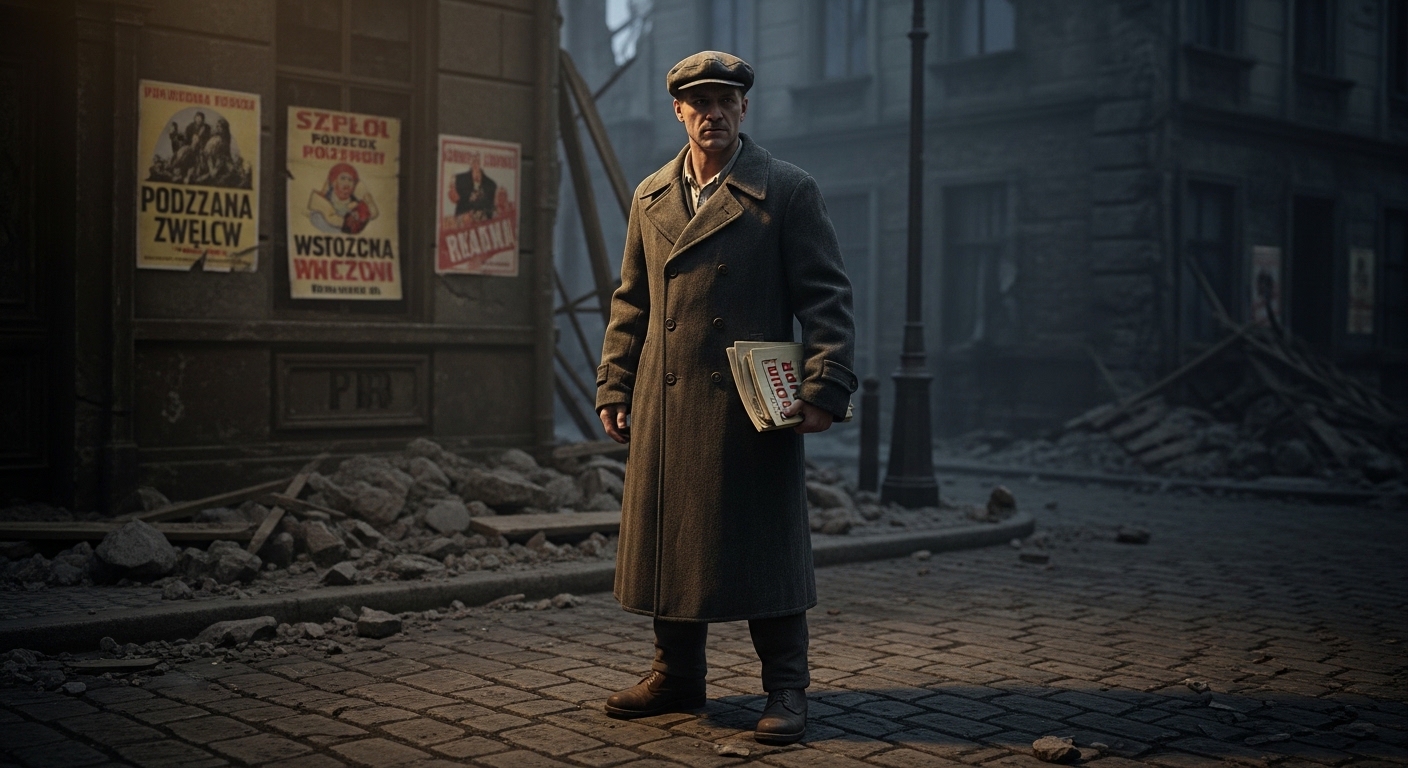
Introduction to Pewcetowiec
The word pewcetowiec is a Polish term used to describe a member or supporter of the political party known as the Polish Workers’ Party. In Polish, this party was called Polska Partia Robotnicza, often shortened to PPR. A pewcetowiec was someone connected to that party, either as an official member, activist, or loyal supporter.
Understanding what a pewcetowiec means requires looking at Poland’s history, especially during and after the Second World War. The term is strongly linked to a specific political period when communist ideas shaped the government and daily life in Poland.
This article explains who a pewcetowiec was, where the term comes from, what role such people played in Polish society, and why the word still matters today.
The Origin of the Word Pewcetowiec
The word pewcetowiec comes from the abbreviation “PPR,” which stands for Polska Partia Robotnicza. In Polish pronunciation, the letters P-P-R are read out as “pe-pe-er.” From this spoken form, the noun pewcetowiec developed.
In simple terms:
- PPR = Polish Workers’ Party
- A pewcetowiec = a person belonging to or supporting PPR
The word follows a common Polish language pattern. When describing someone who belongs to a group or organization, Polish often adds a special ending to the abbreviation or name. That is how “pewcetowiec” was formed.
What Was the Polish Workers’ Party?
The Polish Workers’ Party (PPR) was a communist political party founded in 1942 during the Second World War. It operated in German-occupied Poland and later became one of the most powerful political forces in the country.
After the war ended in 1945, the PPR gained strong influence. With support from the Soviet Union, it played a key role in shaping Poland into a socialist state.
One of the important figures connected with the PPR was Władysław Gomułka, who became a leading political figure in post-war Poland.
A pewcetowiec, therefore, was closely linked to the political changes that took place during this period.
The Historical Context of a Pewcetowiec
To understand a pewcetowiec, it is helpful to understand Poland’s situation at the time.
Poland During World War II
In 1939, Poland was invaded by Nazi Germany and the Soviet Union. The country was divided and suffered greatly during the war. Millions of people lost their lives, and cities were destroyed.
During this time, various resistance movements were formed. The PPR was one of them. It promoted communist ideas and aimed to create a socialist Poland after the war.
A pewcetowiec during the war might have been:
- A member of underground political groups
- A supporter of communist resistance
- A person spreading party ideas
After World War II
When the war ended in 1945, the political situation changed quickly. The Soviet Union had strong influence in Eastern Europe, including Poland. The PPR became one of the main ruling forces.
A pewcetowiec after the war could have been:
- A government official
- A party activist
- A local organizer
- A factory leader promoting socialist policies
The term was often used to describe people loyal to the communist system.
The Role of a Pewcetowiec in Society
The role of a pewcetowiec depended on the time and position of the person.
1. Political Leadership
Some pewcetowcy (plural form) worked in high political offices. They helped create new laws and manage the state under socialist principles.
2. Local Party Activism
Others worked at the local level. They organized meetings, educated citizens about party policies, and promoted state goals.
3. Workplace Influence
In factories and offices, a pewcetowiec could act as a party representative. They ensured that workers followed state plans and supported government policies.
Pewcetowiec and Ideology
The ideology behind the pewcetowiec was communism. This system believed in:
- State ownership of factories and land
- Equal distribution of wealth
- Strong government control
- Close ties with the Soviet Union
A pewcetowiec believed in these ideas and worked to promote them.
The Merger and the End of PPR
In 1948, the Polish Workers’ Party merged with another political group to form the Polish United Workers’ Party (Polska Zjednoczona Partia Robotnicza, PZPR).
This new party ruled Poland until 1989.
One of the important leaders during this period was Bolesław Bierut.
After the merger, the term pewcetowiec slowly became historical. New party members were usually called PZPR members instead.
How the Term Pewcetowiec Is Viewed Today
Today, the word pewcetowiec is mainly used in a historical context. It describes people connected to the PPR between 1942 and 1948.
In modern Poland, the word may carry different tones depending on who uses it:
- Some use it neutrally in historical discussions.
- Others use it critically when talking about communist rule.
- It may appear in books, documentaries, or academic studies.
The term is not commonly used in everyday conversation but remains important in understanding Polish political history.
Pewcetowiec in Polish Memory and Education
In Polish schools, students learn about the period when the PPR existed. The term pewcetowiec may appear in history textbooks.
Historians study pewcetowcy to understand:
- How communist rule was established
- How political power shifted after the war
- How ordinary citizens reacted
The word helps describe individuals who played a role in shaping post-war Poland.
Differences Between Pewcetowiec and Other Political Terms
It is important not to confuse pewcetowiec with other political labels.
- A pewcetowiec specifically belonged to the Polish Workers’ Party (PPR).
- A communist is a broader term that applies to anyone who supports communist ideology.
- A PZPR member belonged to the later ruling party formed in 1948.
So, while every pewcetowiec supported communist ideas, not every communist in Poland was a pewcetowiec.
The Social Impact of Pewcetowcy
The actions of pewcetowcy had a lasting effect on Poland.
Economic Changes
Under communist leadership, private businesses were nationalized. The state controlled factories, farms, and major industries.
Political Changes
Opposition parties were gradually removed from power. The political system became centralized and controlled by one dominant party.
Cultural Influence
Education, media, and arts were influenced by socialist values. Party members, including pewcetowcy, supported these changes.
Pewcetowiec and Historical Debate
The legacy of pewcetowcy is debated among historians.
Some argue that they helped rebuild Poland after a devastating war. They organized industry and created a new political system.
Others argue that their actions limited political freedom and supported a system controlled by the Soviet Union.
These discussions show that the word pewcetowiec represents more than just party membership. It represents a key moment in Polish history.
Why the Term Pewcetowiec Still Matters
Even though the PPR existed for only a few years, the period it shaped lasted decades. Understanding the term pewcetowiec helps people understand:
- The start of communist rule in Poland
- The political system that lasted until 1989
- The historical roots of modern Polish politics
The word connects language, politics, and history in one simple term.
FAQs About Pewcetowiec
1. What does pewcetowiec mean?
A pewcetowiec was a member or supporter of the Polish Workers’ Party (PPR).
2. When did pewcetowcy exist?
They existed mainly between 1942 and 1948.
3. Was every communist in Poland a pewcetowiec?
No, only members of the PPR were called pewcetowcy.
4. Is the term pewcetowiec still used today?
Yes, but mostly in historical discussions.
5. Why is the term pewcetowiec important?
It helps explain the early years of communist rule in Poland.
Conclusion
The word pewcetowiec refers to a member or supporter of the Polish Workers’ Party, a communist political party active during and shortly after World War II. The term comes directly from the Polish abbreviation PPR and reflects a specific period in Polish history.
Pewcetowcy played an important role in shaping post-war Poland. They were involved in political leadership, social changes, and the creation of a socialist state influenced by the Soviet Union. Although the party merged into a new organization in 1948, the historical importance of pewcetowcy remains significant.
Today, pewcetowiec is mainly a historical term. It reminds people of a time when Poland underwent major political and social transformation. By understanding this word, we gain clearer insight into Poland’s complex past and the forces that shaped its modern identity.
