


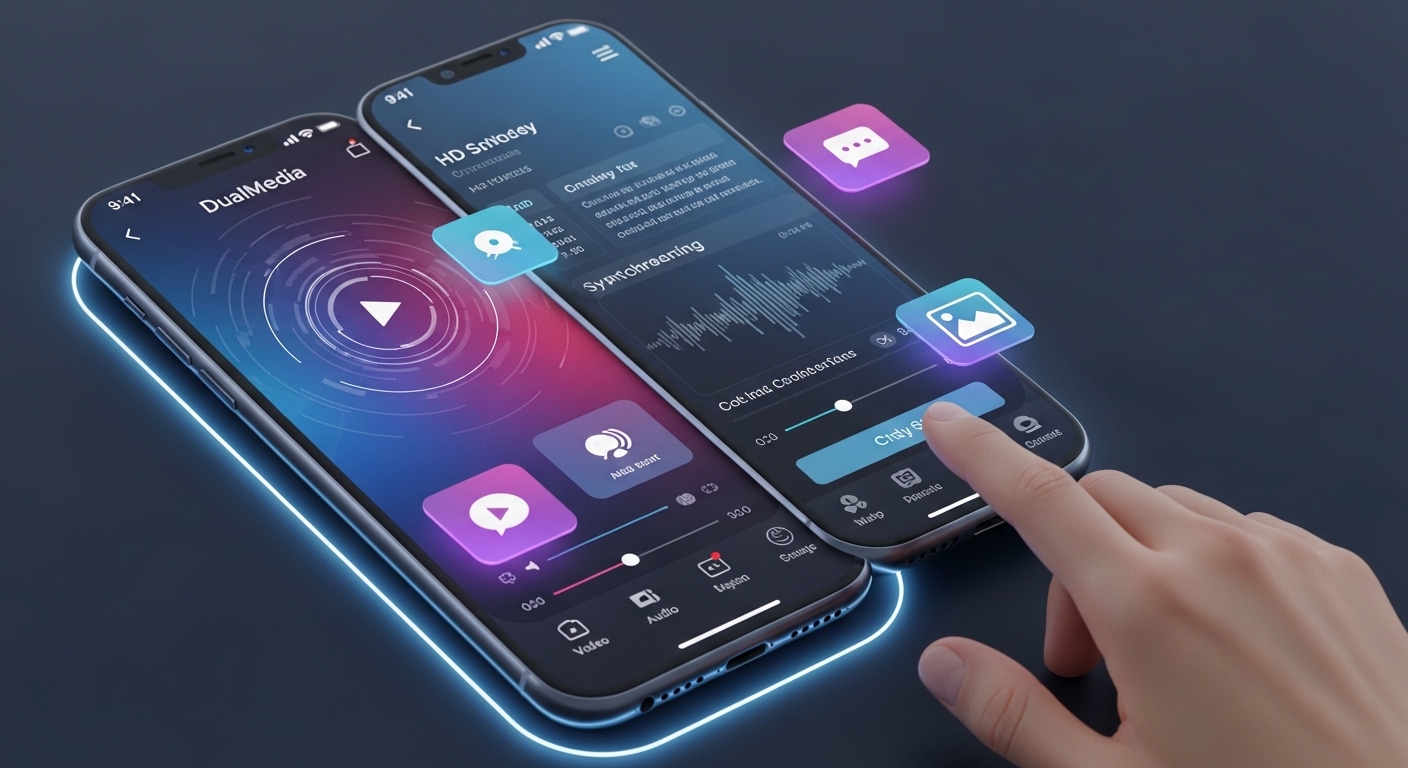
The keyword “application mobile dualmedia” suggests a mixed intent:
- Informational: What is a dual media mobile application?
- Practical/Commercial: How can it be used or built?
- Problem-solving: How to combine multiple media formats (e.g., video + audio, image + text) efficiently in one app?
This article is structured to clarify the concept, solve implementation challenges, and show real-world value.
What Is an Application Mobile DualMedia?
An application mobile dualmedia refers to a mobile app designed to handle, display, or integrate two types of media simultaneously or interactively.
Common Dual Media Combinations:
- Video + Audio (e.g., streaming platforms)
- Image + Text (e.g., social media posts)
- Audio + Text (e.g., podcast apps with transcripts)
- AR + Video (e.g., augmented reality apps)
- Live stream + Chat (real-time engagement apps)
Rather than treating media separately, these apps synchronize multiple formats to enhance user experience.
Why DualMedia Apps Matter Today
Modern users expect rich, interactive, and immersive experiences. Single-format apps often fail to engage users deeply.
Key Benefits:
- Increased user engagement
- Better information retention
- Enhanced monetization opportunities
- Cross-format accessibility (e.g., listening + reading)
Real-World Examples
1. E-Learning Apps
Apps like online course platforms combine:
- Video lectures
- Text notes
- Audio explanations
Use case: A student watches a lecture while reading subtitles and reviewing notes simultaneously.
2. Social Media Platforms
Modern platforms combine:
- Images/videos
- Captions
- Background audio
Use case: A user posts a short video with music and descriptive text to increase reach and engagement.
3. Fitness Apps
DualMedia approach:
- Video workouts
- Audio coaching instructions
Use case: Users follow a trainer visually while listening to instructions hands-free.
4. News & Content Apps
- Article text
- Embedded videos or audio summaries
Use case: Users can read or listen depending on context (e.g., commuting vs. relaxing).
Core Features of a DualMedia Mobile Application
To build or evaluate such an app, look for these essential features:
1. Media Synchronization
- Audio aligned with video or text
- Timestamp-based syncing
2. Multi-layer UI/UX
- Split screens
- Overlay components (e.g., captions on video)
3. Performance Optimization
- Efficient media loading
- Adaptive streaming
4. Offline Access
- Downloadable media bundles
- Smart caching
5. User Control
- Toggle between media formats
- Playback speed adjustments
Practical Use Cases Across Industries
Education
- Interactive textbooks (video + text)
- Language learning (audio pronunciation + written words)
Healthcare
- Patient education apps (visual + spoken instructions)
- Therapy apps combining guided audio and visuals
Entertainment
- Dual-screen experiences (movie + behind-the-scenes content)
- Interactive storytelling apps
Marketing
- Product demos (video + specs)
- Shoppable videos (media + clickable product links)
How to Build an Application Mobile DualMedia
Step 1: Define Media Pairing
Decide the primary combination:
- Video + Audio?
- Text + Image?
- Live stream + chat?
Step 2: Choose Tech Stack
- Frontend: Flutter, React Native
- Backend: Node.js, Firebase
- Media Handling: FFmpeg, WebRTC
Step 3: Focus on Synchronization Logic
- Use timestamps
- Buffer management
- Event-driven playback control
Step 4: Optimize for Performance
- Lazy loading
- CDN delivery
- Adaptive bitrate streaming
Step 5: Test User Experience
- Ensure smooth transitions
- Avoid lag between media types
Comparison: DualMedia vs Single Media Apps
| Feature | DualMedia Apps | Single Media Apps |
|---|---|---|
| Engagement | High | Moderate |
| Complexity | Higher | Lower |
| Development Cost | Medium–High | Low–Medium |
| User Retention | Strong | Average |
| Accessibility | Better | Limited |
Conclusion: DualMedia apps are more powerful but require careful design and optimization.
Pros and Cons
Pros
- Rich, immersive experience
- Better learning and retention
- Higher engagement rates
- Multi-purpose functionality
Cons
- Higher development complexity
- Increased data usage
- Performance challenges on low-end devices
- Requires strong UX design to avoid clutter
Common Challenges (and Solutions)
1. Lag Between Media
Solution: Use buffered playback and synchronization algorithms.
2. Overloaded UI
Solution: Minimalist design with layered interaction.
3. High Data Consumption
Solution: Offer low-quality modes and offline downloads.
4. Device Compatibility
Solution: Optimize for multiple screen sizes and hardware capabilities.
SEO & Monetization Opportunities
DualMedia apps open strong monetization channels:
- In-app ads (video + interactive elements)
- Subscriptions (premium content bundles)
- Affiliate integration (shoppable media)
- Data insights (user behavior across formats)
Future Trends in DualMedia Applications
- AI-driven personalization (auto-select preferred media format)
- AR/VR integration
- Voice + visual assistants
- Interactive video commerce
Frequently Asked Questions (FAQ)
1. What does “dualmedia” mean in mobile apps?
It refers to apps that integrate two types of media simultaneously, such as video with audio or text with images.
2. Are dualmedia apps harder to build?
Yes, they require advanced synchronization, UI design, and performance optimization, but offer better engagement.
3. Which industries benefit the most?
Education, entertainment, fitness, healthcare, and e-commerce benefit significantly.
4. Do dualmedia apps consume more data?
Typically yes, but this can be reduced with:
- Compression
- Offline mode
- Adaptive streaming
5. Is dualmedia suitable for small businesses?
Absolutely. Even simple combinations like image + text storytelling can boost engagement without heavy development costs.
Final Takeaway
An application mobile dualmedia is not just a trend—it’s a shift toward multi-sensory digital experiences. Whether you’re building an app or choosing one, the real value lies in how effectively it blends media formats to solve user problems.
If done right, it can transform a basic app into a highly engaging, versatile, and revenue-generating platform.
