


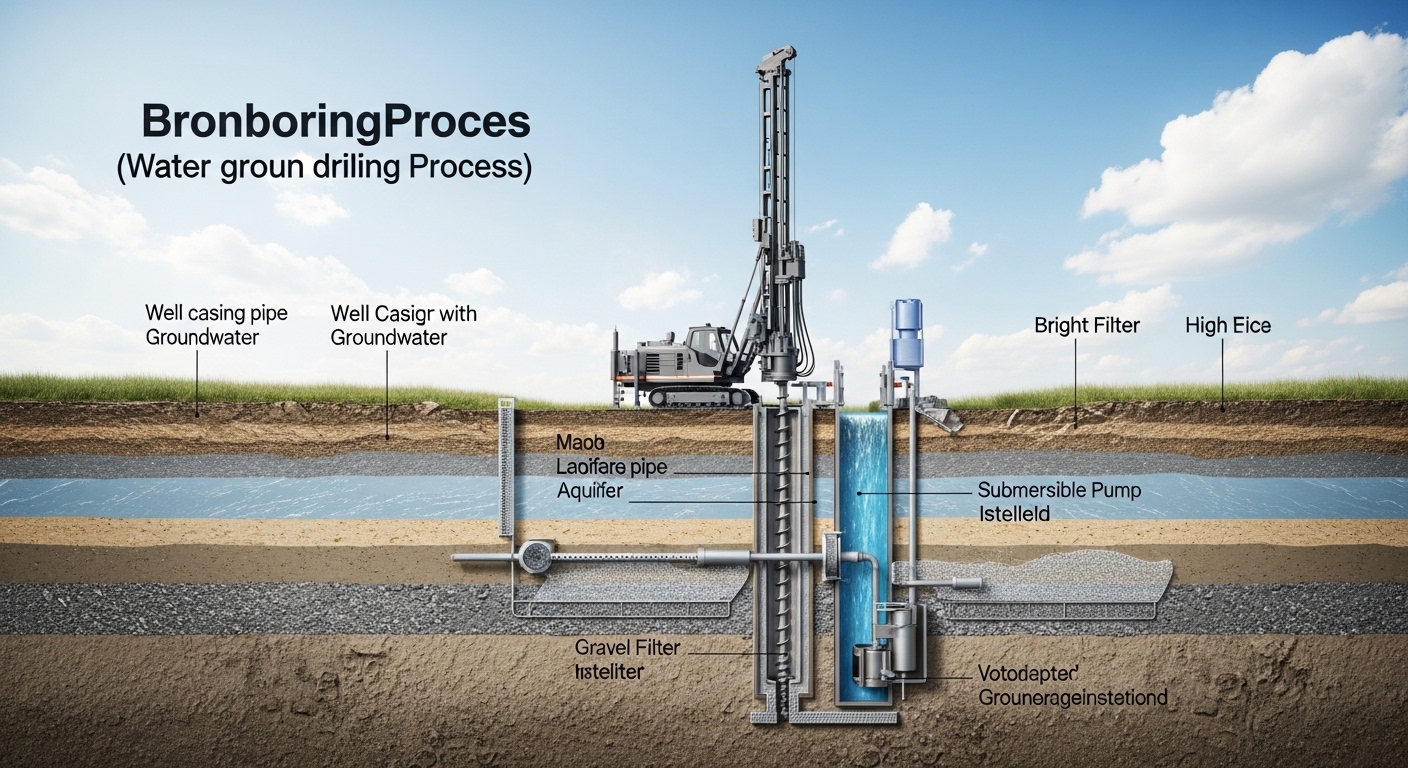
The keyword “bronboringproces” comes from Dutch and literally means “well drilling process.” People searching this term typically want to understand:
- How a water well is drilled
- The steps involved in groundwater extraction
- What equipment and techniques are used
- Costs, permits, and practical applications
- Whether drilling a well is suitable for homes, farms, or industry
This guide explains the entire bronboringproces from planning to water extraction, including real-world applications, drilling methods, advantages, and potential limitations.
What Is the Bronboringproces?
The bronboringproces refers to the complete procedure of drilling a groundwater well to access underground water sources. These wells are used for:
- Drinking water supply
- Agricultural irrigation
- Industrial water use
- Groundwater monitoring
- Geothermal heating systems
The process involves geological assessment, drilling, casing installation, pump installation, and water testing.
A properly executed well can last 20–50 years depending on the soil conditions and maintenance.
Step-by-Step Breakdown of the Bronboringproces
1. Site Assessment and Groundwater Survey
Before drilling begins, specialists evaluate:
- Soil composition
- Groundwater depth
- Aquifer capacity
- Environmental restrictions
Methods used
- Geological maps
- Ground-penetrating radar
- Test drilling
- Hydrogeological analysis
Example
A farm planning irrigation may discover groundwater at 40 meters depth, making well drilling viable.
2. Obtaining Permits and Legal Approval
In many regions, drilling a water well requires permission due to groundwater protection regulations.
Common requirements include:
- Environmental permits
- Local water authority approval
- Depth limitations
- Water extraction limits
Ignoring permits can result in fines or forced closure of the well.
3. Selecting the Right Drilling Method
The bronboringproces uses different drilling techniques depending on soil and rock conditions.
1. Rotary Drilling
Most common method.
How it works
- A rotating drill bit cuts into soil or rock
- Drilling fluid removes debris
- Suitable for deep wells
2. Percussion Drilling
Also called cable tool drilling.
- A heavy drill repeatedly strikes the ground
- Used in hard rock environments
3. Auger Drilling
Best for soft soil and shallow wells.
- Screw-like auger rotates into the ground
- Soil is lifted to the surface
Comparison of Well Drilling Methods
| Method | Best For | Depth Capability | Speed | Cost |
|---|---|---|---|---|
| Rotary drilling | Most geological conditions | Deep (100m+) | Fast | Medium |
| Percussion drilling | Hard rock | Deep | Slow | Higher |
| Auger drilling | Soft soil | Shallow | Fast | Low |
Most residential wells use rotary drilling.
4. Drilling the Borehole
Once the method is selected, the drilling rig begins creating the borehole.
Typical residential wells range from:
- 30–100 meters deep
- 15–30 cm diameter
During drilling:
- Soil samples are collected
- Aquifer layers are identified
- Water-bearing formations are confirmed
5. Installing Well Casing
After drilling, a well casing is installed.
The casing is a pipe that:
- Prevents borehole collapse
- Protects groundwater from contamination
- Stabilizes the well structure
Common casing materials:
- PVC
- Steel
- Stainless steel
A well screen is added at the bottom to allow water in while blocking sand.
6. Gravel Packing and Sealing
To improve filtration:
- Gravel is placed around the well screen
- Clay or cement seals upper layers
This prevents:
- Surface contamination
- Sand intrusion
- Aquifer mixing
7. Pump Installation
Once the structure is complete, a pump system is installed.
Common types include:
Submersible Pumps
Most popular option.
- Installed deep inside the well
- Quiet and efficient
- Suitable for homes and farms
Jet Pumps
Used for shallow wells.
- Located above ground
- Easier to maintain
8. Water Testing and Quality Verification
Before using the well water, testing is essential.
Tests typically check for:
- Bacteria
- Nitrates
- Heavy metals
- pH levels
- Mineral content
If contamination is detected, filtration systems may be required.
Real-World Examples of the Bronboringproces
Agricultural Irrigation
A vegetable farm drills a 70-meter well to irrigate crops.
Benefits:
- Reduces dependence on municipal water
- Saves long-term costs
- Provides reliable supply during droughts
Rural Residential Water Supply
Homes outside city infrastructure often rely on private wells.
A family well typically:
- Produces 1,000–3,000 liters per hour
- Supports household use including drinking, washing, and gardening.
Industrial Water Use
Factories may drill deep wells to supply:
- Cooling systems
- Manufacturing processes
- Cleaning operations
Industrial wells often reach 150 meters or more.
Practical Use Cases of the Bronboringproces
1. Drinking Water Wells
Private homes or communities rely on groundwater for daily use.
2. Irrigation Systems
Farms use wells for crop watering during dry seasons.
3. Geothermal Energy
Deep wells can support ground-source heat pumps.
4. Environmental Monitoring
Scientists drill monitoring wells to track groundwater pollution.
Advantages and Disadvantages of the Bronboringproces
Pros
Independent water supply
Reduces reliance on municipal systems.
Long-term cost savings
Once installed, operating costs are low.
Sustainable resource
Groundwater replenishes naturally in many regions.
High water quality
Often cleaner than surface water.
Cons
High upfront cost
Drilling and installation can be expensive.
Regulatory restrictions
Permits and environmental regulations may apply.
Risk of dry wells
Incorrect location may produce little water.
Maintenance requirements
Pumps and filtration systems need servicing.
Typical Costs of Well Drilling
Costs vary widely based on depth and geology.
| Component | Typical Cost Range |
|---|---|
| Geological survey | $200 – $1,000 |
| Drilling | $30 – $100 per meter |
| Pump installation | $500 – $2,500 |
| Water testing | $100 – $500 |
A residential well may cost $3,000 – $15,000 total.
Maintenance Tips for Long-Lasting Wells
To ensure longevity:
- Test water annually
- Inspect pumps every 2–3 years
- Avoid chemical contamination near the well
- Clean the well screen if clogging occurs
Proper maintenance can extend well life beyond 40 years.
Frequently Asked Questions (FAQ)
What does bronboringproces mean?
The term refers to the process of drilling a water well to access groundwater, including planning, drilling, casing installation, and pump setup.
How deep are most water wells?
Residential wells are typically 30–100 meters deep, depending on groundwater levels.
How long does the drilling process take?
Most wells can be drilled within 1–3 days, but preparation and permits may take several weeks.
Is groundwater safe to drink?
Usually yes, but water testing is essential to detect bacteria, minerals, or contaminants.
How long does a well last?
A properly constructed well can last 20–50 years, especially with regular maintenance.
Final Thoughts
The bronboringproces is a highly technical but valuable method for accessing groundwater for homes, farms, and industries. When done correctly—with proper geological analysis, drilling techniques, and water testing—it provides a reliable, long-term water source.
Understanding each step—from site analysis to pump installation—helps property owners make informed decisions and avoid costly mistakes.
For anyone considering drilling a well, working with licensed drilling professionals and hydrogeologists is crucial to ensure efficiency, safety, and regulatory compliance.
